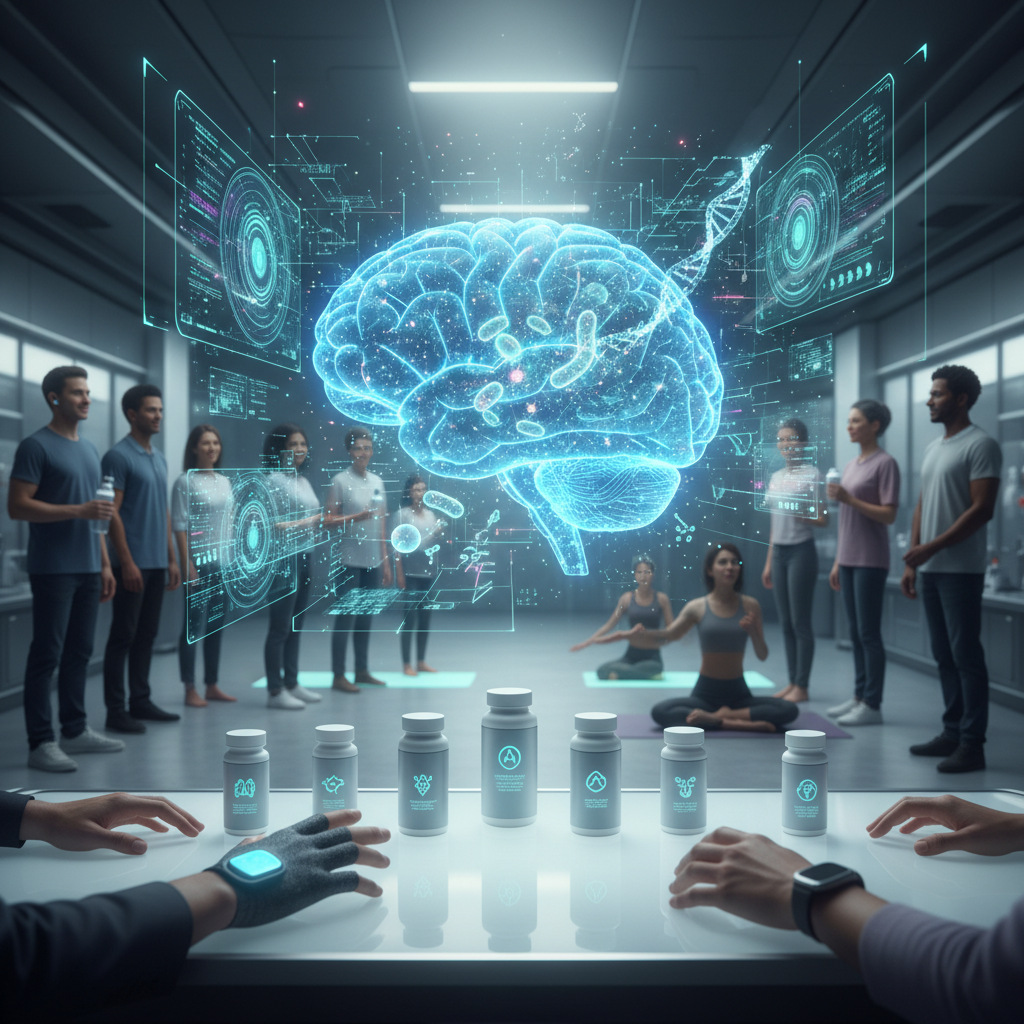
For many seeking cognitive enhancement or mood balance, nootropics and supplements offer promise. Yet, responses vary dramatically. One person thrives on N-Acetyl Cysteine (NAC), another experiences anhedonia. Methylfolate helps some with genetic variations, but causes anxiety in others. Even magnesium, lauded for relaxation, can inexplicably worsen depressive symptoms. This stark individual variability frustrates users, turning the pursuit of well-being into costly trial-and-error. What if we could predict these responses?
The Puzzle of Personal Chemistry
The human body is an intricate biochemical system. Our unique genetic makeup dictates enzyme activity, neurotransmitter synthesis, and receptor sensitivity. Genes like MTHFR affect folate metabolism, impacting neurotransmitters. COMT variations influence dopamine breakdown, affecting responses to stimulants or stress.Our gut microbiome is also critical. Trillions of microbes produce neuroactive compounds influencing brain function and mood. A diverse microbiome processes compounds differently than a dysbiotic one, leading to varied effects. Individual metabolic profiles – how we process nutrients, toxins, and medications – add further complexity.These interconnected systems mean a compound beneficial for one might be inert or detrimental for another. The current one-size-fits-all approach overlooks this truth, leaving users confused.
Beyond Trial-and-Error: The Promise of AI
Generalized health recommendations are yielding to personalized medicine, especially in neurochemical interventions. Imagine moving beyond anecdotal evidence and blind experimentation. Artificial intelligence offers a transformative way to decode individual responses by integrating and analyzing vast, complex datasets.AI excels at identifying subtle patterns invisible to humans. By analyzing data from diverse sources, AI algorithms can construct a comprehensive digital twin of an individual’s neurochemical landscape. This predicts how specific compounds interact with unique biology, replacing guesswork with data-driven precision.
Mapping the Individual Neurochemical Landscape
AI systems need extensive biological data: high-resolution genomic sequencing for predispositions and metabolic quirks. Metabolomic profiles offer real-time biochemical activity snapshots. Crucially, detailed microbiome analysis identifies bacterial strains and their byproducts, linking gut health to brain function.Further data includes lifestyle, diet, environmental exposures, and wearable sensor data (sleep, activity). Cross-referencing these markers with observed responses from large cohorts allows AI to build predictive models. For example, AI might learn that individuals with specific MTHFR variants and gut microbial signatures often respond negatively to methylfolate.
Predictive Power: From Data to Dosage
The goal is personalized, actionable insights. An AI platform could analyze an individual’s integrated biological profile. It would predict the likelihood of positive, neutral, or negative responses to nootropics, recommend optimal dosages, synergistic combinations, and identify compounds to avoid.This empowers clinicians to recommend supplements with greater confidence, reducing adverse effects and accelerating outcomes. For patients, it means a tailored roadmap to cognitive and mood optimization, saving time and frustration. ‘Try it and see’ could become ‘know before you take’.
Challenges and the Road Ahead
While promising, challenges exist. Building large, diverse datasets, ensuring data privacy, and establishing ethical frameworks are paramount. Human biology’s complexity requires continuous AI model refinement and validation through rigorous clinical studies. Collaboration across scientific fields is essential.Still, the trajectory is clear. As AI advances and our biological understanding deepens, personalized neurochemical response prediction nears reality. This isn’t just about finding the ‘right’ supplement; it’s about unlocking deeper self-understanding and fostering individualized brain health.
Takeaways:
- Individual responses to nootropics vary dramatically due to unique genetics, microbiome, and metabolism.
- Current trial-and-error methods are inefficient and frustrating.
- AI can integrate diverse biological data (genomic, metabolomic, microbiomic) to map individual neurochemical profiles.
- This mapping allows AI to predict responses to specific compounds before ingestion.
- Personalized prediction can optimize outcomes, reduce adverse effects, and save resources.
- Challenges include data privacy, ethical considerations, and the need for large, diverse datasets.