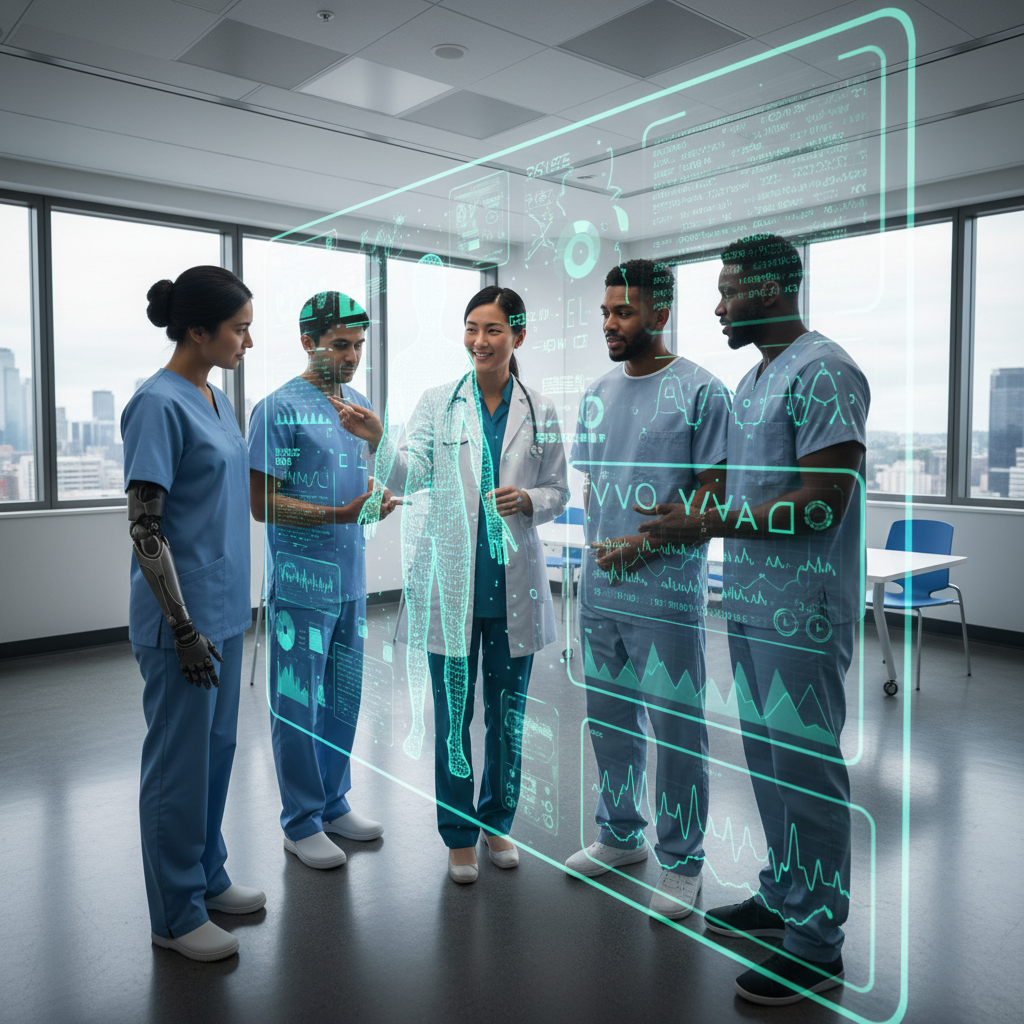
The phrase “AI-assisted diagnosis” can sound intimidating. For many patients, it raises questions: Is a computer making my medical decisions? Will my doctor still be involved? It is completely understandable to feel uncertain about new technologies, especially when they impact your health. At AIHT, we believe understanding is the first step to embracing innovation.
Artificial intelligence is rapidly transforming healthcare, but its role is often misunderstood. AI is not designed to replace your doctor. Instead, it serves as a powerful tool, an intelligent assistant that enhances your physician’s capabilities. Think of it as an advanced microscope or a super-fast data analyst, providing your care team with unprecedented insights.
This article will demystify how AI integrates into the diagnostic process. We will explore how these smart tools augment your doctor’s expertise, leading to more precise diagnoses and personalized treatment plans. Our goal is to empower you with knowledge, showing how AI works hand-in-hand with human medical wisdom.
What Does AI Mean for Your Diagnosis?
At its core, AI in diagnostics involves algorithms that analyze vast amounts of medical data. This data can include everything from medical images like X-rays and MRIs to genetic sequences, patient history records, and even real-time physiological measurements. AI systems are trained to identify patterns and anomalies that might be difficult or time-consuming for humans to spot.
When an AI tool assists in diagnosis, it is essentially sifting through mountains of information at incredible speed. It compares a patient’s data against millions of similar cases, looking for connections and indicators of specific conditions. This process helps flag potential issues earlier and with greater accuracy than traditional methods alone.
It is crucial to remember that AI provides insights and probabilities, not definitive diagnoses. The output of an AI system is a recommendation or a highlighted area of concern. This information is then presented to your doctor, who uses their clinical judgment, experience, and understanding of your unique situation to make the final diagnosis.
How AI Augments Clinical Expertise
Enhancing Medical Imaging Analysis
One of AI’s most impactful applications is in medical imaging. Radiologists and other specialists review countless scans daily. AI algorithms can be trained to detect subtle signs of disease in X-rays, CT scans, MRIs, and mammograms, often before they are apparent to the human eye. This capability is particularly useful for conditions like early-stage cancers or neurological disorders.
For example, an AI system might highlight a tiny nodule on a lung scan that a human might overlook due to fatigue or the sheer volume of images. This does not mean the AI makes the diagnosis. Instead, it draws the radiologist’s attention to a specific area, prompting a closer look and more detailed assessment, ultimately reducing the chance of missed diagnoses.
Uncovering Hidden Patterns in Patient Data
Beyond images, AI excels at processing complex datasets like electronic health records (EHRs). It can analyze a patient’s entire medical history, lab results, medication lists, and genetic information to identify correlations and risk factors. This ability helps predict disease progression, identify patients at high risk for certain conditions, or even suggest optimal drug dosages.
Imagine an AI sifting through years of your health data, noticing a subtle trend in blood markers that indicates a predisposition to a chronic condition. Your doctor can then use this AI insight to recommend preventative measures or early interventions, tailoring your care plan proactively. This proactive approach can significantly improve long-term health outcomes.
Personalizing Treatment Strategies
Once a diagnosis is made, AI can further assist in developing personalized treatment plans. By analyzing a patient’s genetic profile, lifestyle factors, and response to previous treatments, AI can suggest therapies most likely to be effective. This is particularly valuable in fields like oncology, where specific genetic mutations can dictate the success of targeted therapies.
AI can also help manage complex medication regimens by identifying potential drug interactions or suggesting dosage adjustments based on real-time patient data. This level of personalized medicine, driven by AI, moves healthcare beyond a one-size-fits-all approach, ensuring that treatments are optimized for each individual.
Your Role in an AI-Assisted Diagnosis
As a patient, your role remains vital. When your doctor mentions AI tools in your diagnostic process, do not hesitate to ask questions. Inquire about what the AI is being used for, how it contributes to the diagnosis, and how your doctor interprets its findings. Understanding this partnership between human and machine can alleviate concerns and build trust.
Remember, your doctor is the ultimate decision-maker. They integrate AI insights with their clinical expertise, your personal history, and your values to formulate a comprehensive diagnosis and treatment plan. AI provides data and analysis; your doctor provides empathy, judgment, and the human touch essential to healing.
Embrace AI as an ally in your healthcare journey. It is a powerful technology designed to enhance the quality and precision of medical care, allowing your doctor to be even more effective. This collaborative approach ensures you receive the most informed and personalized care possible.
- AI tools augment, not replace, doctors in diagnosis.
- AI excels at analyzing vast medical data and identifying subtle patterns.
- It enhances medical imaging, uncovers hidden data patterns, and personalizes treatments.
- Doctors use AI insights alongside their clinical judgment to make final decisions.
- Patients should feel empowered to ask questions about AI’s role in their care.