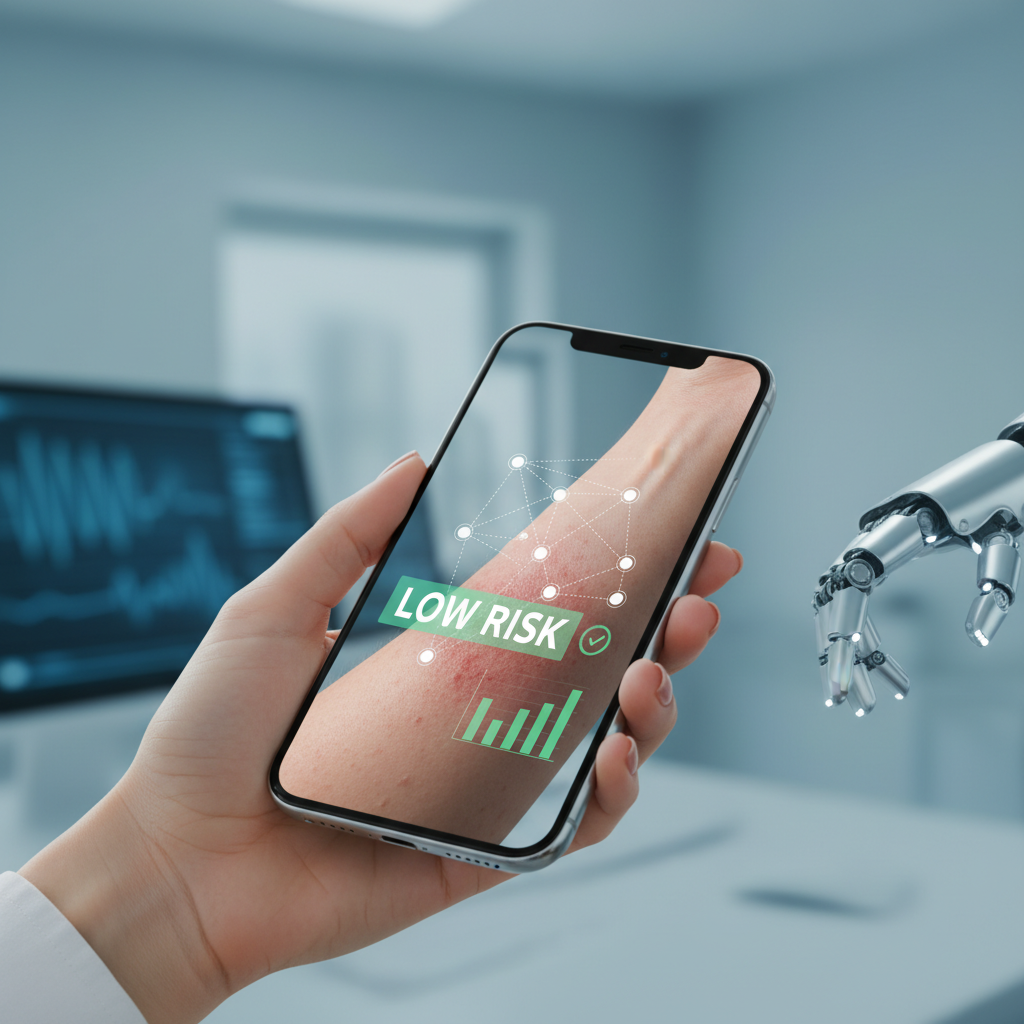
Waking up with an unfamiliar rash, persistent eye redness, or sudden swelling often brings immediate concern and uncertainty. Patients struggle to interpret these visual symptoms, making it hard to determine urgency. This diagnostic ambiguity causes anxiety and can lead to unnecessary emergency room visits, burdening healthcare systems.
AI-powered tools offer a vital solution. By providing initial insights into concerning physical changes, these visual recognition technologies empower patients to pre-screen symptoms. This guidance helps direct them to appropriate care pathways, optimizing healthcare resources and reducing patient stress.
The Challenge of Visual Symptom Interpretation
Our bodies frequently display visual signals difficult for the untrained eye to assess. Skin conditions, from mysterious marks to widespread rashes, are challenging to differentiate. A minor irritation might mask something serious; a striking rash could be benign.
Eye changes, like persistent redness or swelling, can indicate various conditions. Similarly, localized or generalized swelling might signal anything from a minor injury to a deep vein thrombosis. This ambiguity often forces patients to guess, sometimes defaulting to urgent professional help.
AI: A New Lens for Visual Recognition
AI-powered visual recognition tools offer a sophisticated approach. Trained on vast medical image datasets, these systems identify patterns and anomalies. Analyzing a patient-submitted image, AI provides an initial assessment, acting as a digital triage assistant.
For dermatology, AI algorithms analyze skin lesions and rashes against thousands of diagnosed cases, flagging characteristics warranting professional attention. In ophthalmology, AI examines eye images for inflammation or infection. For swelling, AI assesses its extent, guiding patients on next steps.
How AI Pre-screening Works
The process is straightforward. A patient captures a clear photograph of the symptom with a smartphone, then uploads it to a secure, AI-powered application. The AI algorithm processes the image, cross-referencing its extensive knowledge base.
Patients receive a preliminary assessment, categorizing symptoms into risk levels (e.g., “monitor,” “consult doctor,” “seek urgent care”). These tools explicitly state they offer guidance, not a diagnosis. Benefits include reduced patient anxiety, optimized healthcare resources, and timely evaluations for serious conditions.
Future & Ethical Considerations
AI visual recognition tools are continuously improving in accuracy. They are designed to augment, not replace, human clinical judgment. A physician’s expertise remains crucial for definitive diagnosis and treatment.
Ethical considerations, particularly data privacy and security, are paramount. Platforms handling sensitive health images must adhere to strict regulatory standards. Transparency in AI’s assessments is vital for building trust. As AI advances, these tools will become more sophisticated, integrating with other health data for a holistic view, representing a significant step towards patient-centric healthcare.
Key Takeaways:
- Visual symptom uncertainty is a widespread concern.
- AI visual recognition tools pre-screen physical changes (rashes, swelling, eye issues).
- Tools analyze images, offering guidance on urgency and care pathways.
- AI pre-screening reduces unnecessary ER visits and patient stress.
- It’s a triage tool, not diagnostic; professional consultation is essential.
- Data privacy and ethical deployment are critical.